May 27, 2026 · Updated
Best San Blas Photography Spots, by Subject and by Light
Shoot Chichime for postcard palms, the Piscina Natural for horizon and starfish shots, Cayos Holandeses and Isla Pelícano for the clearest water, and the Perro Chico wreck underwater. The real limit is light: day tours are on the islands from mid-morning to mid-afternoon, so golden hour and night skies require an overnight stay.
The spots at a glance
| Spot | Best subject | Best light | Watch out for | How to get there |
|---|---|---|---|---|
| Chichime | Leaning palms, the channel between two cays | Low tide, early or late sun | Residents in frame; ask first | Most Classic and VIP itineraries |
| Piscina Natural | Water-level horizon, starfish | High sun for colour in the water | Glare; no shade at all | Classic, VIP and overnight stays |
| Cayos Limones | Several small cays in one frame, clear shallows | Mid-morning | Short stops, so be ready on the boat | VIP tour; Day 2 of overnight stays |
| Cayos Holandeses | Reef, lagoon, empty horizons | Any time; clarity is the point | Longer open-water crossing for gear | Its own early-departure tour |
| Isla Pelícano | Clear water, an island with few boats | Late morning onward | Private itinerary only | Super VIP private day tour |
| Perro Chico | The wreck, underwater | Morning, before the boats gather | Crowds by mid-morning | VIP tour; Day 2 of overnight stays |
| Any overnight island | Sunrise, sunset, the Milky Way | Dawn, dusk, moonless nights | Limited electricity for charging | Any cabin stay |
Why light matters more than the island
San Blas sits around nine degrees north of the equator, close enough that sunrise and sunset stay near six o’clock all year and the sun climbs steeply in between. By mid-morning it is high, and from late morning to early afternoon it is nearly overhead: superb for turquoise water seen from above, harsh on faces and flat on beaches.
Now look at a day tour’s clock. The published Isla Diablo itinerary, for example, reaches its first island at 8:30 AM and turns back toward the mainland at 3:00 PM. Every day tour works within a similar window, because the road from Panama City is long. That means the soft first and last hours of light fall while you are in a 4x4, not on a beach.
So the question for a photographer is not which island but which hours. An overnight stay is the only way to stand on sand at sunrise and sunset, and most of the archipelago has no grid lighting, so on a moonless night the sky is genuinely dark. Our Photographer’s Dream package is planned around exactly that trade: fewer islands, better hours.
Chichime: palms, a channel and the tide
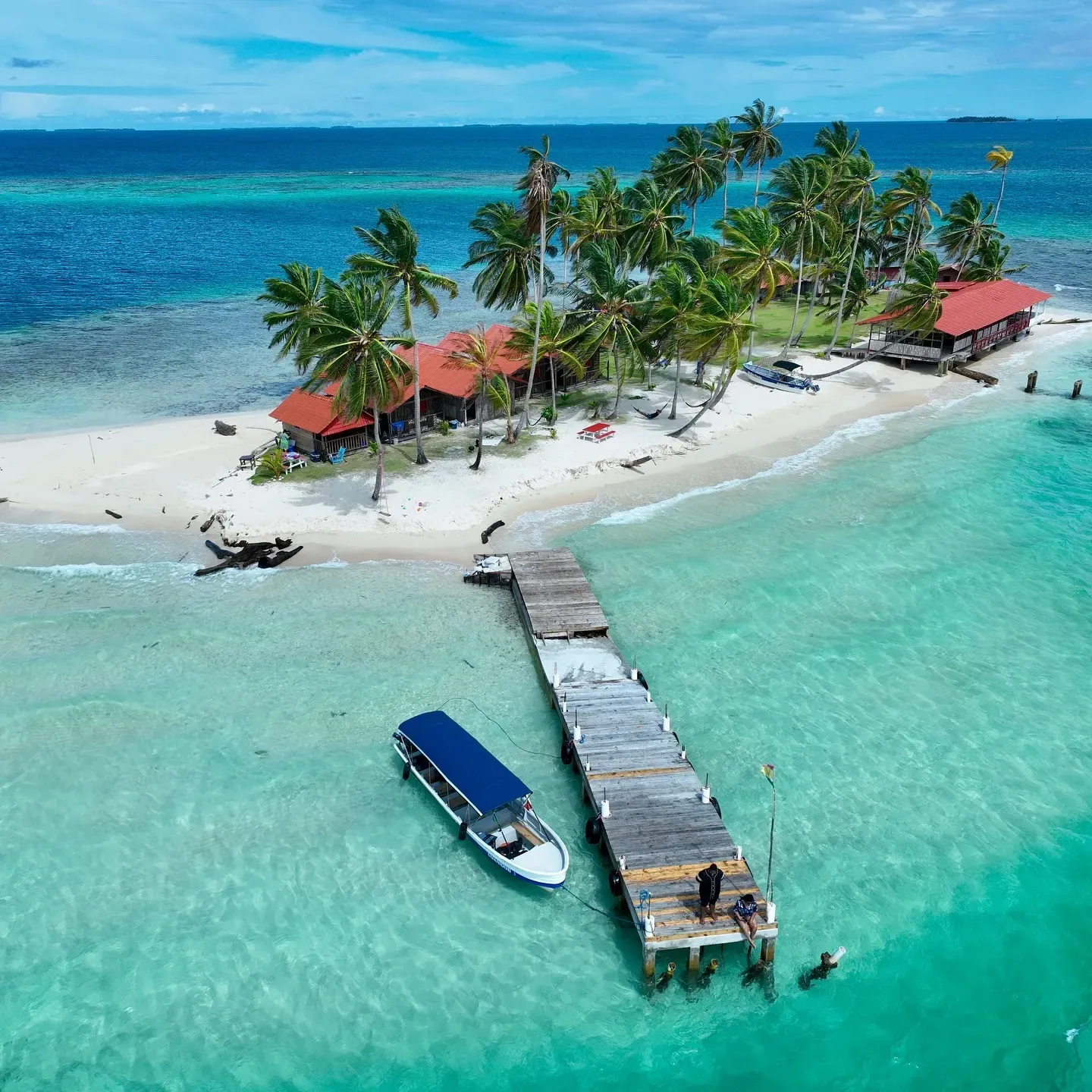
Chichime is two cays separated by a channel you can wade at low tide, and that channel is the shot: a strip of pale sand or shallow water with open sea on both sides. Check the tide with your guide; at higher water the crossing becomes a swim and the composition changes. The leaning palms work best with the sun low and to one side, which again favours anyone staying the night nearby.
A small Guna fishing community lives on one of the cays. Canoes on the sand and nets drying are working equipment, not props, and people are not part of the scenery unless they agree to be.
The Piscina Natural: a horizon with no land
At the Piscina Natural you stand waist-deep on a sandbar in open sea. Shoot from water level and the frame holds nothing but sea and sky, with no shoreline to reveal the depth; that is what makes the images look unreal. A circular polariser cuts the surface glare enough to show starfish on the bottom. Photograph them where they lie and never lift them out of the water.
The outer cays: where clarity lives
Clear water is mostly a matter of distance. Cayos Holandeses, far from the mainland, sees fewer boats and keeps the best-preserved coral in the comarca, so reef shots and empty horizons come easily. Isla Pelícano, in the same sector, is reached on a private itinerary and rewards anyone who wants an island without another tour group in the background. Closer in, the Cayos Limones give you several small cays in a single frame.
Underwater: the Perro Chico wreck
The wreck off Perro Chico lies in shallow water, so a waterproof phone case or an action camera is enough. Arrive early if you can: by mid-morning several boats share the spot and the sand they stir up softens the water. There is no question of taking a camera deeper: scuba diving is not allowed for visitors in Guna Yala.
People, villages and drones: the rules
Guna Yala is a self-governed territory, and photography of people follows its customs rather than your itinerary. Ask before photographing anyone, their home or their canoe; the answer is usually yes when the question comes first. Buying a mola from the woman who made it is a better start to that conversation than a lens, and our Guna culture guide covers the etiquette in detail.
Drones are a matter for the community whose island you are on, not something a tour can authorise on your behalf. Ask in advance and accept a no.
Seasons through a lens
The dry season, roughly December to April, brings the most reliable blue skies and the busiest boats. The rainy season, May to November, usually means short, heavy showers rather than grey days, and it brings towering clouds, dramatic light after a downpour and emptier beaches. Our month-by-month weather guide breaks it down.
Gear that survives the trip
Everything arrives by open boat, so spray is guaranteed and sand finds its way everywhere. Pack cameras in a dry bag that seals properly, change lenses inside a cabin rather than on a windy beach, and rinse salt off with fresh water the same day. Large hard cases are hard to fit on the boats. Electricity on the islands is limited, so bring spare batteries and a power bank.
Frequently asked questions
What is the best time of day for photos in San Blas?
The first and last hours of light, which only overnight guests experience on the islands. During a day tour, late morning and midday light is excellent for turquoise water from above and the Piscina Natural, but hard on portraits.
Which San Blas island is best for photography?
It depends on the subject. Chichime for palms and the classic beach view, the Piscina Natural for horizon shots, Cayos Holandeses and Isla Pelícano for clear water, and Perro Chico for an underwater subject.
Can I fly a drone in San Blas?
Only with permission from the local community. Guna Yala governs itself, and a tour operator cannot grant drone permission for an island it does not control. Ask before you plan a shot around it.
Can I photograph Guna people?
Ask first, every time. A direct, friendly question is both courteous and usually successful. Beaches and water need no permission; people, homes and canoes do.
Do I need an overnight stay to photograph the sunset?
Yes. Day tours leave the islands in the afternoon to make the drive back to Panama City, so sunset happens on the road. A cabin stay puts you on an island for both sunset and sunrise.
Do I need an underwater camera?
Not a professional one. The wreck at Perro Chico and the reefs are shallow, so a waterproof phone case or an action camera captures them well from the surface.
Ready to see it for yourself?
Message us on WhatsApp — a real person helps you plan, no contact form.
Book Now