History of San Blas: The 1925 Dule Revolution and Guna Yala's Autonomy
Guna Yala is autonomous because in February 1925 the Guna rose against the police Panama had stationed on their islands to change their way of life. The uprising, known as the Dule Revolution or Guna Revolution, ended with a peace agreement signed on 4 March 1925 at El Porvenir, and the road to today’s comarca starts there.
Nearly every article about San Blas opens with the water. The more interesting fact is political: this archipelago is one of the very few places in the Americas where an indigenous people rose against a government, negotiated a settlement, and still governs its own territory a century later. The beaches are the consequence of that, not the other way round.
The pressure that built before 1925
Outsiders had tried to settle this coast long before: Scotland’s Darien colony of 1698 lasted less than two years. After Panama separated from Colombia in 1903, its governments set out to “civilise” the Guna. According to the Panamanian newspaper La Estrella de Panamá, President Belisario Porras pursued this on three fronts: a colonial police force, schools and farming programmes. On the islands that meant pressure to abandon molas and beadwork, compulsory Western clothing, bans on ritual practices, schooling only in Spanish, and traditional leaders pushed aside in favour of officials. Non-Guna police were stationed in the communities to enforce it.
The friction built over years, and it was not about land alone: it was about whether the Guna would be permitted to remain Guna. The decision to take up arms, La Estrella reports, was made in August 1924. Panamá América adds that the first planning meetings were held in Playón Chico and Ailigandí, with several Guna leaders present, well before the American Richard Marsh, of whom more below, entered the story.
February 1925: the uprising
The attack was timed for Carnival, when the comarca’s intendant was away for the festivities. The exact date depends on the source: some accounts place it on the night of 21 to 22 February, others on the 25th, which is the date Panamanian law later chose to commemorate. Guna fighters attacked the colonial police posts on several islands at once.
The death toll is also reported differently. La Estrella counts 22 police officers and one urrigan, a Guna warrior. The US minister in Panama, in a telegram dated 27 February, estimated between 10 and 30 police and civilians killed, and described the revolt as general along the north coast, from El Porvenir to Puerto Obaldía.
During those days the leaders also published a declaration of independence in the Panamanian press, for what became known as the Republic of Tule, listing their grievances against the government.
Who led it
Two names appear in every source, and a third comes up often:
- Nele Kantule (Iguaibiliginia), a sáhila and political strategist whom the BBC describes as a kind of seer and community leader. He lived until 1944.
- Simral Colman (Ologgindibipiler), the sagla of Ailigandí. According to La Estrella he was born around 1840, had been first general chief since 1907, and died in Ailigandí on 5 August 1929. He helped draft the peace terms.
- Olonibiginya, listed among the leaders by La Estrella and Panamá América. The name is spelled several ways, and there is no reliable biography that allows more to be said.
The most debated figure is an outsider: Richard O. Marsh, an American explorer in the area who encouraged the declaration of independence. Some historians credit him with the revolt; Guna and Panamanian writers reject that. The US legation’s own report from 1925 concluded that the uprising was justified and that Marsh had not instigated it, though his sympathy for the Guna had carried him too far. The anthropologist James Howe, who studied the episode in depth in A People Who Would Not Kneel (Smithsonian Institution Press, 1998), describes the Guna seeking Marsh out in 1924.
The agreement of 4 March 1925 at El Porvenir
The fighting was short; what followed mattered as much. The United States mediated through its envoy in Panama, and the confrontation moved to negotiation rather than a long campaign. Minister John G. South reported to Washington in a telegram dated 4 March 1925 that, after a six-hour meeting, Panama’s foreign and justice ministers and 13 Guna chiefs from the northern region had signed an agreement at El Porvenir. He signed only as a witness.
The terms, as that telegram lists them:
- The Guna submit to Panamanian law, commit no further hostile acts and return the weapons taken from the police.
- They keep their shotguns.
- Panama keeps officials in the area but leaves internal order to the Guna.
- Panama will not impose schools on them and will respect their customs.
The delegation then sailed to Ailigandí aboard the cruiser USS Cleveland so that the southern chiefs would accept the same terms. Some accounts say the agreement was signed on board; the minister’s telegram places the signing at El Porvenir. Either way, the outcome was an agreement between Guna leadership and the Panamanian government, not a surrender by either side.
1925 at a glance
| Date | What happened |
|---|---|
| August 1924 | Guna leaders decide to take up arms |
| 21–25 February 1925 | The uprising during Carnival; sources differ on the exact night |
| 27 February 1925 | US minister reports a general revolt from El Porvenir to Puerto Obaldía |
| 4 March 1925 | Peace agreement signed at El Porvenir, with the US as witness |
| 1938 | Law 2 creates the Comarca de San Blas |
| 1953 | Law 16 organises it and recognises the Guna General Congress |
| 1998 | Law 29 makes 25 February Dule Revolution Day |
From revolt to comarca
The agreement did not create autonomy overnight. Law 2 of 1938 created the Comarca de San Blas, and Law 16 of 1953 organised it and recognised the Guna General Congress as an authority; Law 20 of 1957 declared the territory a reserve. How those congresses and the sagla of each community work today is explained in the Guna General Congress explained, and why the territory’s name kept changing, from San Blas to Kuna Yala to Gunayala, in what “Guna Yala” means.
The Guna themselves insist on a nuance that changes how the whole story reads. A September 2026 article in Cultural Survival, written from within the Guna General Congress, states that their autonomy did not originate in a state law: the revolution defended and reaffirmed a self-government that already existed. Guna Yala is part of Panama — it is not a separate country and its residents are Panamanian citizens — but its internal government is Guna, and that distinction is the whole point.
How 1925 is remembered today
Law 29 of 1998 declared 25 February Dule Revolution Day and a public holiday in the comarca. Communities mark it every year: in 2013 the Associated Press described a re-enactment on Ustupu, with people dressed in red, wooden rifles and firecrackers. For the centenary in 2025, Gardi Sugdub staged a community play in Dulegaya that ran for weeks.
If you visit around that date you may see a red and yellow flag carrying a symbol that resembles a swastika. It is the flag of the revolution, and the BBC points out that the symbol had its own meaning for the Guna before Nazism adopted it. Asking your guide about it is a better conversation than any assumption.
Why 1925 is still visible on a day trip
You do not have to look for the history here; it is embedded in the mechanics of an ordinary visit:
- The entry tax collected at the edge of the territory is an exercise of self-government, not a generic tourist fee. Somebody had to win the right to charge it.
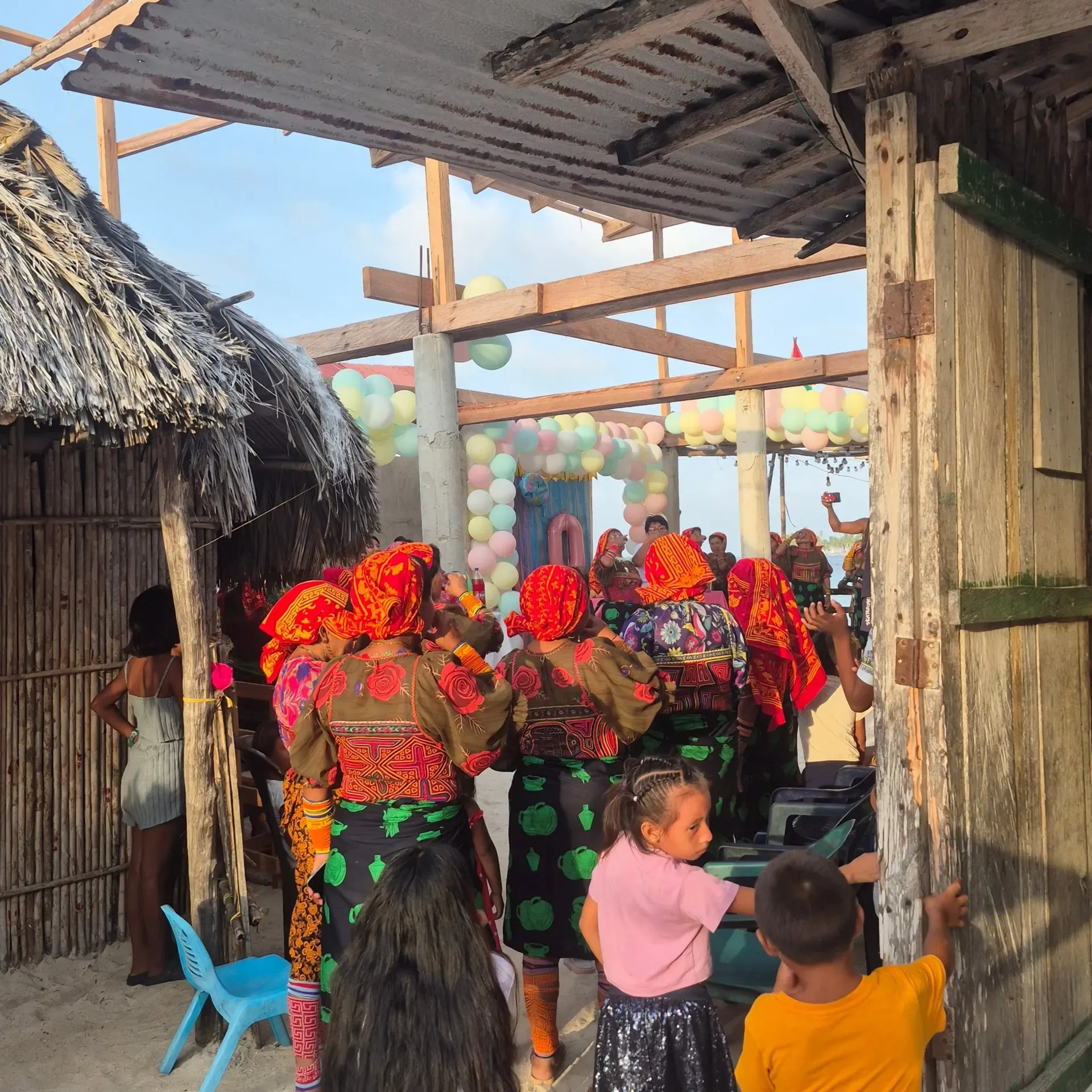
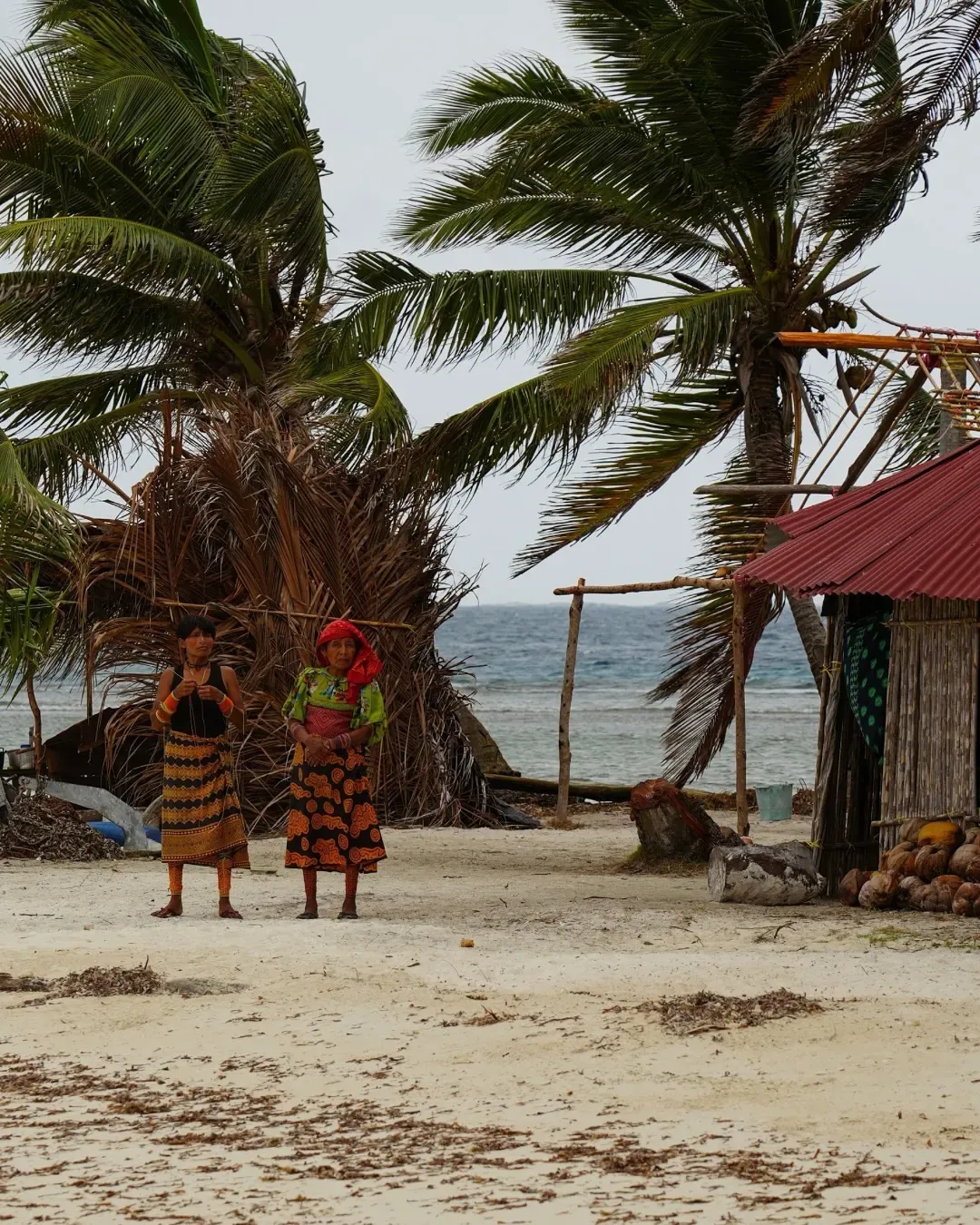
- Every guide, captain and cabin owner being Guna is a direct continuation of that autonomy, not a marketing arrangement.
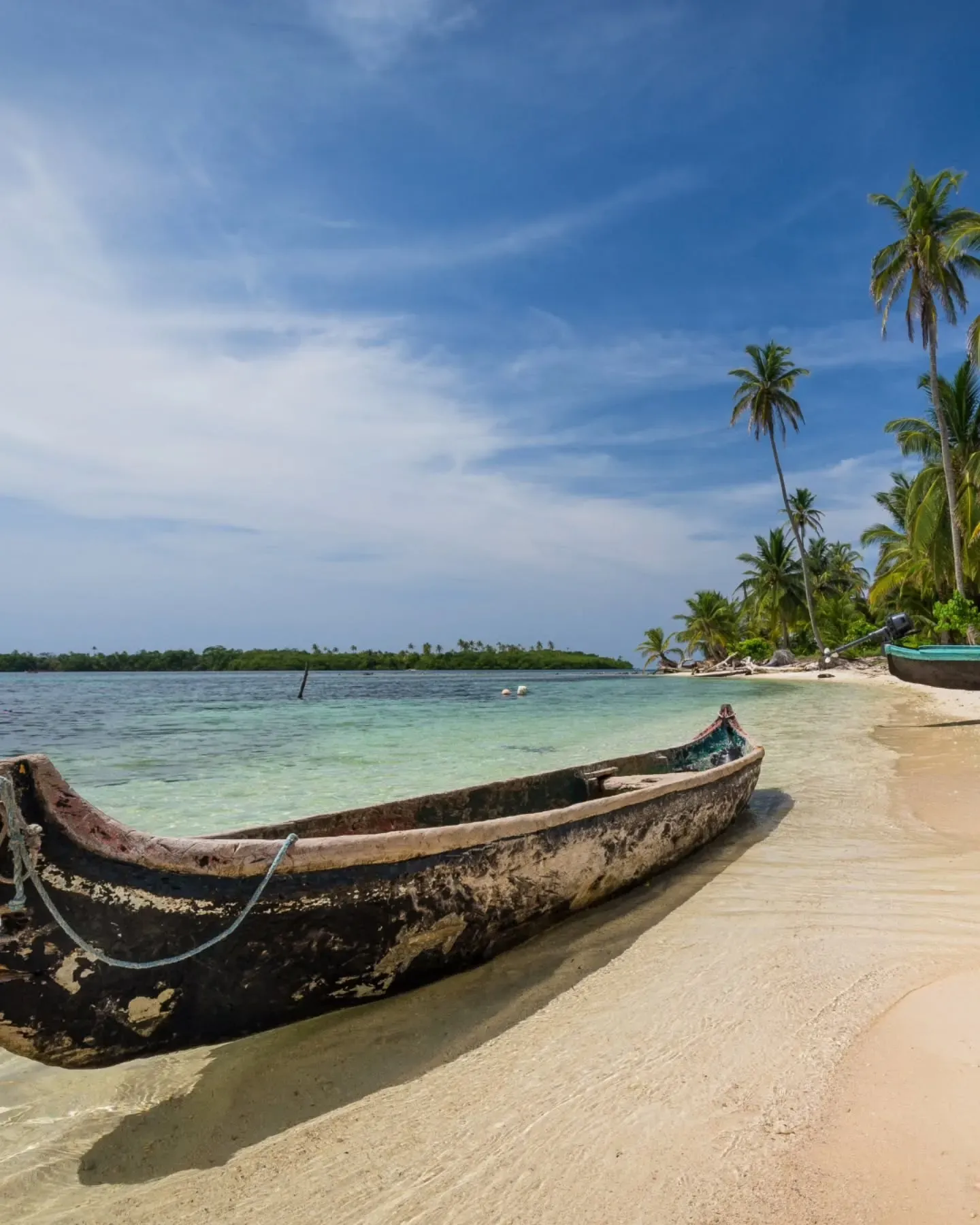
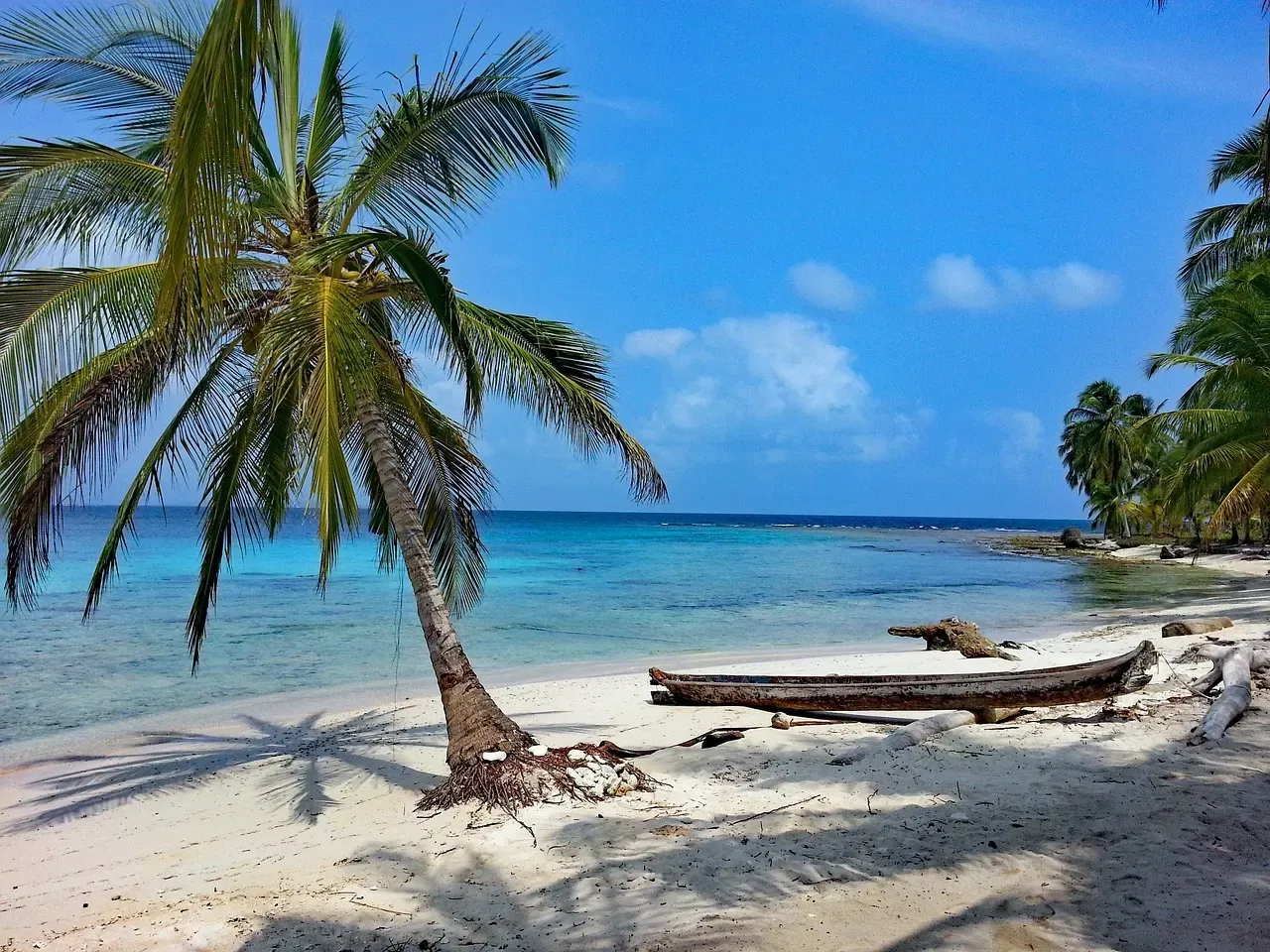
- The absence of resorts follows from Guna control over land, which cannot be sold to outsiders — the outcome of a political settlement, not of low demand.
- Local rules about photography and residential areas exist because a self-governing people sets its own rules; our Guna culture guide covers them.
Understanding that changes the register of a visit. You are a guest in a territory that argued, fought and negotiated to stay itself, not a customer on a beach that happens to be pretty.
Frequently asked questions
What was the Dule Revolution?
The Guna armed uprising of February 1925 against the Panamanian police who were imposing Western clothing, Spanish-only schooling and outside authorities on them. It is also called the Guna Revolution, and it ended with a peace agreement signed on 4 March 1925 at El Porvenir, with the United States as mediator and witness.
When exactly did the uprising happen?
During Carnival in February 1925. Some sources place the attack on the night of 21 to 22 February and others on the 25th. Panamanian law commemorates 25 February, which Law 29 of 1998 made Dule Revolution Day.
Who led the 1925 Guna revolution?
The main names are Nele Kantule and Simral Colman, with Olonibiginya also cited among the leaders. The American explorer Richard O. Marsh supported them, but his role is disputed, and Guna sources insist the decision to rise was their own.
Did the revolution create the Guna Yala comarca?
Not directly. The 1925 agreement bound Panama to respect Guna customs and leave internal order to the Guna. The comarca came by law in 1938, and its organisation around the Guna General Congress in 1953.
Is Guna Yala independent from Panama?
No. Guna Yala is an autonomous comarca within Panama, and the Guna are Panamanian citizens. What is distinct is internal governance: land, community life and tourism are decided through Guna institutions rather than provincial administration.
Does any of this affect me as a visitor?
Directly. The community tax you pay, the fact that your guide and boat captain are Guna, the absence of chain hotels and the local rules you are asked to respect are all consequences of that settlement rather than incidental features of the destination.
Ready to plan your trip?
Message us on WhatsApp — a real person helps you plan, no contact form.
Book Now