April 25, 2026 · Updated
Can You Scuba Dive in San Blas? The Honest Answer
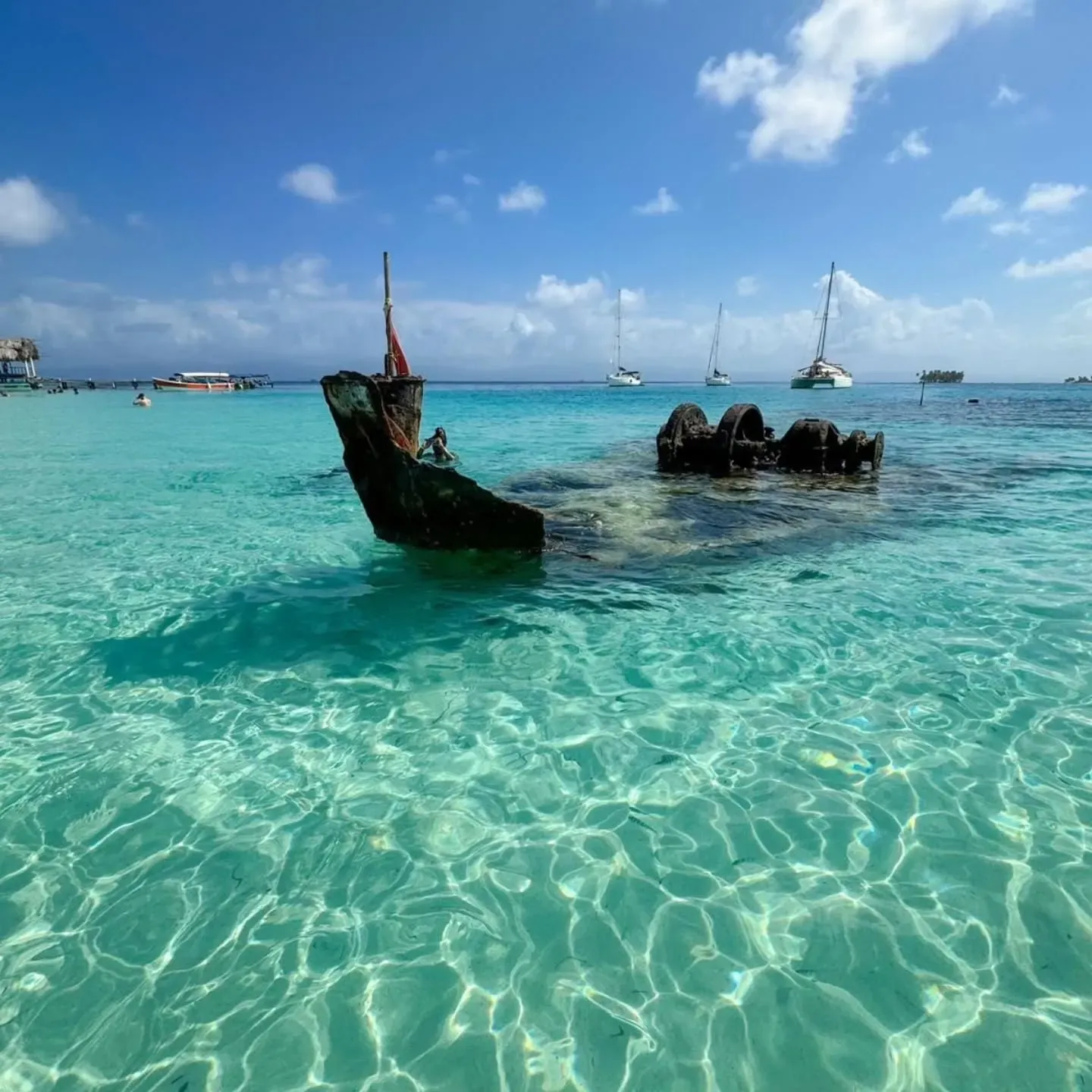
No. San Blas is Guna Yala, a self-governing Indigenous territory, and scuba diving there is prohibited for outsiders. No day tour, cabin stay or private charter can add a tank dive. What visitors do instead is snorkel: the reefs, the Perro Chico wreck and the Cayos Holandeses lagoon all lie in a few metres of clear water.
Is scuba diving allowed in San Blas?
Not for visitors. The archipelago is not a Panamanian province run by a tourism ministry; it is the comarca of Guna Yala, and the Guna decide what happens in its waters. A June 2026 report from the comarca in Cultural Survival describes it as a territory where “scuba diving is prohibited for outsiders”, and adds that snorkelling carries restrictions even for local people. A 2021 report on Guna lobster fishing in the Panamanian daily Mi Diario was more concrete: tanks are not permitted in the comarca except for research authorised by the Guna General Congress, and tourists caught using them are fined.
The Cultural Survival article follows a group of young Guna women who trained as divers through a coral-monitoring programme and earned open-water certifications, the first formal ones for women from their community. So tanks do go into these waters, but for the Guna’s own reef work, not as a product sold to tourists.
That distinction matters when you read a foreign website promising “diving in San Blas”. Either it means snorkelling, or it describes something the territory does not authorise. Ask before you pay.
Where the restriction comes from
You will not see a sign at the checkpoint on the road to Cartí that says “no scuba”. The rule sits inside a wider legal framework the Guna wrote for themselves: the Fundamental Law of Gunayala, approved by the comarca’s congresses in 2013. Four of its provisions explain the logic:
- Article 37 declares the territory’s renewable resources and biodiversity the collective heritage of the Guna people.
- Article 39 has the General Congress set closed seasons for vulnerable species; the Guna introduced their own lobster closure, from March to May, back in 2000.
- Article 40 bans methods that allow large-scale exploitation of marine resources.
- Articles 53 and 54 reserve all tourism to the Guna and require written authorisation from the Guna General Congress, renewed every two years.
Put those together and a dive centre would have to be Guna-run, licensed by the congress and offering an activity the congress restricts. That is why nothing you can book here, from the simplest tour to a private yacht, includes a tank. How the congress itself works is explained in our guide to the Guna General Congress.
There is history behind the caution, too. In late 1997 the communities voted not to renew the lease on the Smithsonian Tropical Research Institute’s marine station on the island of Naneluga, and the last scientists left in 1998, as The Christian Science Monitor reported at the time. Mistrust about who profited from the specimens and knowledge collected there was part of the reason. The Guna have long been deliberate about who works beneath their sea, and on whose terms.
Why you will not miss the tanks
The archipelago’s reefs are shallow, and shallow is where the light is. Colour fades quickly with depth, and the reds and oranges go first; in two or three metres of clear Caribbean water, a reef looks the way it does in photographs. Here a snorkeller floating at the surface sees most of what a diver would, and sees it in better light.
The signature site makes the point. The Perro Chico shipwreck rests close to the beach, coral-covered and busy with parrotfish and sergeant majors, shallow enough for someone who has never snorkelled. Further out, the lagoon at Cayos Holandeses holds the best-preserved coral in the comarca, protected mainly by the long crossing that keeps boat traffic down.
Where to snorkel instead
| Spot | What is under the surface | Level | How you get there |
|---|---|---|---|
| Perro Chico | Coral-covered wreck, reef fish | Complete beginner | VIP day tour; Day 2 island tour on overnight stays |
| Cayos Holandeses | The comarca’s best-preserved coral | Confident in open water | Its own tour, with an earlier pickup and a minimum group |
| Chichime | Shallow reef just off the sand | Beginner | Most Classic and VIP itineraries |
| Piscina Natural | Sandbar with starfish, waist-deep | Non-swimmers | Classic, VIP and every overnight stay |
| Isla Diablo | Sand flats, parrotfish, the odd ray | Easy, unguided | The Isla Diablo day tour |
Gear is not always included, so check the tour you book. Our snorkelling guide covers masks, fit and which itinerary is built around the reef.
If you really want to dive in Panama
Panama has good diving; it simply happens outside Guna Yala. The usual options:
- Portobelo, on the Caribbean coast in Colón province, has dive centres and is closer to Panama City than Cartí. It is the obvious pairing if you want one day under water and another day in San Blas.
- Coiba National Park, on the Pacific side, is a UNESCO World Heritage Site and the country’s best-known destination for bigger marine life. It needs a few days.
- Bocas del Toro, near the Costa Rican border, has dive shops in town. If you are weighing it against the islands, our San Blas vs Bocas del Toro comparison sets out the differences.
A sensible plan for divers is to treat San Blas as the snorkelling and culture part of the trip, and to book tanks somewhere they are welcome.
Reef manners when you cannot dive
Snorkelling is allowed, so the reef depends on how visitors behave at the surface. Use reef-safe sunscreen only, never stand on coral, adjust your mask in open water or at the boat, and take nothing home, shells included. Starfish at the Piscina Natural stay in the water. These are not tour-company whims; they are the visible end of the same conservation logic written into the Fundamental Law.
Frequently asked questions
Is scuba diving banned in San Blas?
For visitors, yes. Tanks are allowed only for research authorised by the Guna General Congress, tourists caught diving are fined, and every tourism activity in the comarca needs the congress’s permission. No day tour, overnight stay or charter can legally include a tank dive.
Can I bring my own tanks on a private yacht charter?
No. A charter sails inside the same territory and under the same rules as everyone else. It can give you more time at remote reefs and a boat to yourself, but the time in the water is snorkelling.
Do Guna people scuba dive?
Some do, for specific purposes. Cultural Survival reported in 2026 on young Guna women certified as open-water divers through a coral-monitoring programme. That is the community’s own reef work, not a service offered to tourists.
Where is the best snorkelling in San Blas?
Cayos Holandeses has the healthiest coral, and the Perro Chico wreck is the most accessible. Both sit in shallow water where a mask and a life jacket are all you need.
Where can I go scuba diving near Panama City?
Portobelo, on the Caribbean coast, is the closest established dive area. For a longer trip, Coiba National Park on the Pacific and the dive shops in Bocas del Toro are the other common choices.
Do I need to be a strong swimmer to snorkel here?
No. Life jackets are mandatory on the boats and you can keep yours on in the water. The wreck and the Piscina Natural are both shallow, and guides place nervous swimmers accordingly.
Ready to see it for yourself?
Message us on WhatsApp — a real person helps you plan, no contact form.
Book Now