October 13, 2026
San Blas vs San Andrés vs Roatán vs Los Roques: Which Caribbean Islands Suit You?
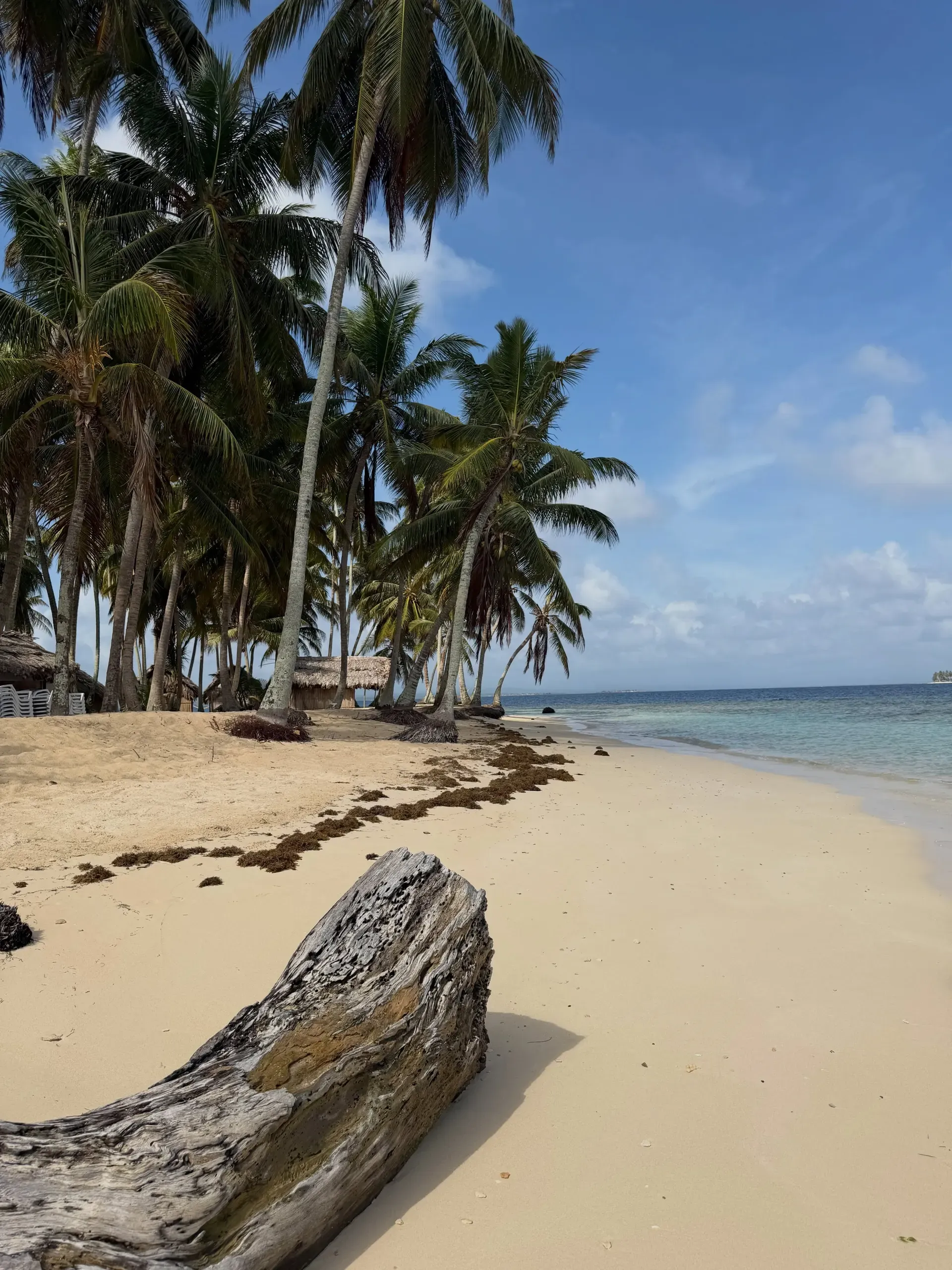
San Blas (Panama) is the only one of the four with no resorts at all: a Guna-governed archipelago reached by 4x4 and boat from Panama City, with no airport hotels or town. San Andrés (Colombia) and Roatán (Honduras) are developed islands with international airports, hotels and nightlife. Los Roques (Venezuela) is a protected national park of small guesthouses, reached by a short flight from Caracas.
All four sell the same postcard of white sand and turquoise water. What separates them is everything around it, so this comparison sticks to well-established facts and includes the downsides of San Blas too.
The four destinations side by side
| San Blas (Guna Yala) | San Andrés | Roatán | Los Roques | |
|---|---|---|---|---|
| Country | Panama | Colombia | Honduras | Venezuela |
| Usual way in | 4x4 from Panama City to Cartí port, then a boat | Flight from mainland Colombia | Flight (including nonstop from the US) or ferry from La Ceiba | Short domestic flight from the Caracas area |
| What is built | Guna villages and simple cabins; no resorts by law | A busy town, hotels, duty-free shops | Resorts, dive lodges, two cruise terminals | Posadas (guesthouses) on Gran Roque, under park rules |
| Water | Shallow reefs, sandbars, calm lagoons | Famous colour gradients, snorkelling and diving | Mesoamerican Barrier Reef, wall diving | A vast lagoon, reef, steady wind |
| Scuba diving | Not allowed for visitors | Available | The main draw | Available |
| Culture you meet | Guna communities with their own government | Raizal islanders, Creole English | English-speaking Bay Islanders, Garifuna | A small island community |
| Cost level | Low for a day trip, modest overnight | Middle | Middle to high | High: everything arrives by air or sea |
Getting there from a hub city
San Blas is the only one you can reach without boarding a plane. From Panama City it is about two and a half hours by 4x4 to Cartí, then a boat out to the islands, which is why a full day trip with a 5:00 AM pickup is possible at all. Small planes do serve a few airstrips in the comarca, but that is rarely how visitors arrive; our guide to flights to San Blas explains why. For the road-and-boat route in detail, see how to get to San Blas.
San Andrés sits far out in the western Caribbean, roughly 750 km from the Colombian mainland. Its airport has domestic routes from cities such as Bogotá, Medellín, Cali and Cartagena, plus some international service. There is no regular passenger ferry; the sea route is for cruise ships.
Roatán is about 65 km off the north coast of Honduras. Its international airport has nonstop flights from several US cities, and ferries run from La Ceiba on the mainland. For North American travellers it is often the easiest of the four to reach in a single day.
Los Roques is reached almost entirely by air, on small aircraft from the Caracas side of the coast. Getting there therefore depends on getting into Venezuela first, and that is the deciding factor for many travellers: check your own government’s current travel advice and the state of international flights to Caracas before planning anything.
How developed is each one?
This is the biggest difference, and the one the photos hide.
- San Blas has no resort strip, no beach clubs and no town to walk around. That is a decision, not a gap: Guna Yala is a self-governed comarca where tourism is reserved to the Guna and outsiders cannot buy land or build hotels. You sleep in a simple Guna-run cabin, in a tent or on a sailboat. More on that in our page about Guna Yala.
- San Andrés is the most urbanised. A 1954 decree made it a duty-free zone, which brought a wave of tourism and migration, and today it is a busy, densely populated island with hotels of every size, restaurants and shopping.
- Roatán combines resorts and dive lodges with real towns. West End is its social and diving hub, West Bay its best-known beach, and two cruise terminals bring ship passengers on call days.
- Los Roques has been a national park since 1972. Development is controlled, and almost everyone stays in small posadas on Gran Roque, the only inhabited island.
The water and the reefs
All four have the clear, warm water you are imagining. The differences are in what you do in it.
San Blas is built for swimming, floating and snorkelling: shallow reefs, sandbars and calm lagoons close to the islands. Scuba diving is not permitted for visitors in Guna Yala, a rule we explain in can you scuba dive in San Blas?. If diving is the reason for your trip, that alone settles the question.
Roatán is the diver’s pick of the four: it lies on the Mesoamerican Barrier Reef, the second-largest barrier reef in the world, with drop-offs right off the north shore. San Andrés is famous for its “sea of seven colours” and belongs to the Seaflower Biosphere Reserve, recognised by UNESCO in 2000. Los Roques is a huge lagoon fringed by reef, with reliable wind that makes it a kitesurfing and fly-fishing destination as well.
The culture you will actually meet
On a San Blas trip the people running your day are Guna: the captain, the cook, the family whose island you land on. The comarca has its own authorities, the Guna General Congress among them, and community islands are lived-in villages, not attractions.
San Andrés has its own native people, the Raizal, Afro-Caribbean islanders with English and Creole roots. Roatán has English-speaking Bay Islanders and a Garifuna community at Punta Gorda. Los Roques has a small community on Gran Roque. In all three, though, tourism is run by a much wider mix of businesses than in San Blas, where it stays in Guna hands.
Honest downsides
- San Blas: basic comfort, no wifi, patchy signal, a long winding road, and a comarca entry tax of $22 for foreigners, paid in cash or by card to the driver, with no ATMs or card terminals on the islands. No diving.
- San Andrés: crowded and built-up by Caribbean-island standards; it is a town holiday with beaches, not a getaway.
- Roatán: the busiest beaches can feel it on cruise-ship days, and resort comfort costs resort prices.
- Los Roques: the hardest to plan, depends on the situation in Venezuela, and tends to be expensive because everything has to be flown or shipped in.
So which one is for you?
- Choose San Blas if you want empty-looking islands, Indigenous culture that is in charge rather than on display, and an escape you can fit into a few days in Panama.
- Choose San Andrés if you want a comfortable beach holiday with a town, restaurants and nightlife.
- Choose Roatán if you dive, or want resort comfort with a direct flight from North America.
- Choose Los Roques if you want a remote marine park, are prepared for the logistics and have checked the travel advice.
If San Blas is on your list, our prices page shows current rates, and the Bocas del Toro comparison covers Panama’s other island option.
Frequently asked questions
Which is cheapest: San Blas, San Andrés, Roatán or Los Roques?
San Blas is usually the least expensive way to spend a day on Caribbean islands, because you get there by road from Panama City and stay in simple Guna-run cabins rather than hotels. San Andrés and Roatán have options at every budget, and Los Roques tends to be the most expensive because everything arrives by plane or boat.
Do I need to fly to get to San Blas?
No. Most visitors travel from Panama City by 4x4 to Cartí port, about two and a half hours, and then by boat to the islands. Small planes serve a few airstrips in the comarca, but routes change often and few travellers use them.
Which of the four is best for scuba diving?
Roatán, on the Mesoamerican Barrier Reef, is the strongest diving destination of the four. San Andrés and Los Roques also offer diving. San Blas does not: scuba diving is not allowed for visitors in Guna Yala, so trips there are about snorkelling and swimming.
Can I combine San Blas with one of the others?
Yes. Panama City’s Tocumen airport is one of the region’s main connecting hubs, so some travellers spend a few days in San Blas and then fly on to another destination. Check current routes with the airlines, as they change.
Ready to see it for yourself?
Message us on WhatsApp — a real person helps you plan, no contact form.
Book Now