October 13, 2026
Are the San Blas Islands Sinking? Sea-Level Rise in Guna Yala, Explained
Not sinking so much as being overtaken by a rising sea. Most inhabited islands in Guna Yala sit only about half a metre above sea level, the Caribbean is rising by 3 to 4 millimetres a year, and in 2024 about 300 families from Gardi Sugdub became Panama’s first community to move to the mainland because of it.
Sinking islands or a rising sea?
The word “sinking” suggests the islands are going down. What scientists describe in Guna Yala is mostly the opposite movement: the sea coming up around islands that were never high to begin with. Steven Paton, who directs the Smithsonian Tropical Research Institute’s physical monitoring programme in Panama, told the Associated Press in 2024 that the islands average only half a metre above sea level, and that the Guna will almost surely have to abandon them by the end of the century or earlier. He called the relocation of Gardi Sugdub a direct consequence of climate change.
The result is the same for the people living there. Water that once stayed on the beach now reaches streets and floors, especially in November and December, when strong winds push the sea onto the islands, according to the AP.
How low are the islands, and how fast is the sea rising?
Not every island is equally exposed. Science News reported in 2023 that some islands in Guna Yala stand several metres above average sea level, while most of the others are uninhabited spits, many a metre or less high. The inhabited islands where the Guna built their towns are, on the whole, very low.
| Measure | Figure | Source |
|---|---|---|
| Average height of the islands | About 0.5 m above sea level | STRI’s Steven Paton, via AP (2024) |
| Height of homes on Gardi Sugdub | About 0.5 m | Panama’s Environment Ministry, via La Prensa (2025) |
| Sea-level rise at Gardi Sugdub | 3.4 mm a year | Environment Ministry, via La Prensa (2025) |
| Sea-level rise in the Caribbean today | About 3-4 mm a year | Paton, via Science News (2023) |
| Expected rate by the end of the century | 1 cm a year or more | Paton, via Science News (2023) |
| Panama’s coastal territory lost by 2050 | About 2.01 % | Environment Ministry study, via AP (2024) |
| Coastal communities expected to relocate | 63, about 38,000 people | Panamanian officials, via AP (2024) |
A few millimetres a year sounds trivial. On an island whose doorsteps sit half a metre above the water, it is not: every centimetre lets ordinary storm waves reach further, and the expected acceleration means the next half-century will not look like the last. Paton’s own image, quoted by the AP, is a disaster unfolding in slow motion rather than a sudden flood.
Why low coral islands are so exposed
Rising water is only part of the story. Several things combine on the islands of Guna Yala:
- Height. With so little land above the water, there is no higher ground on the island to retreat to.
- Crowding. Gardi Sugdub measures about 150 by 400 metres and held nearly 1,300 people, according to Human Rights Watch. There was no room to rebuild further from the water.
- Lost reefs. To make more room, communities extended some islands by filling over coral reefs, Science News reported. That removed a natural barrier against waves, storm surge and erosion.
- Seasonal storms. The windy months at the end of the year bring the worst flooding, and temporary sea walls are often destroyed and have to be rebuilt.
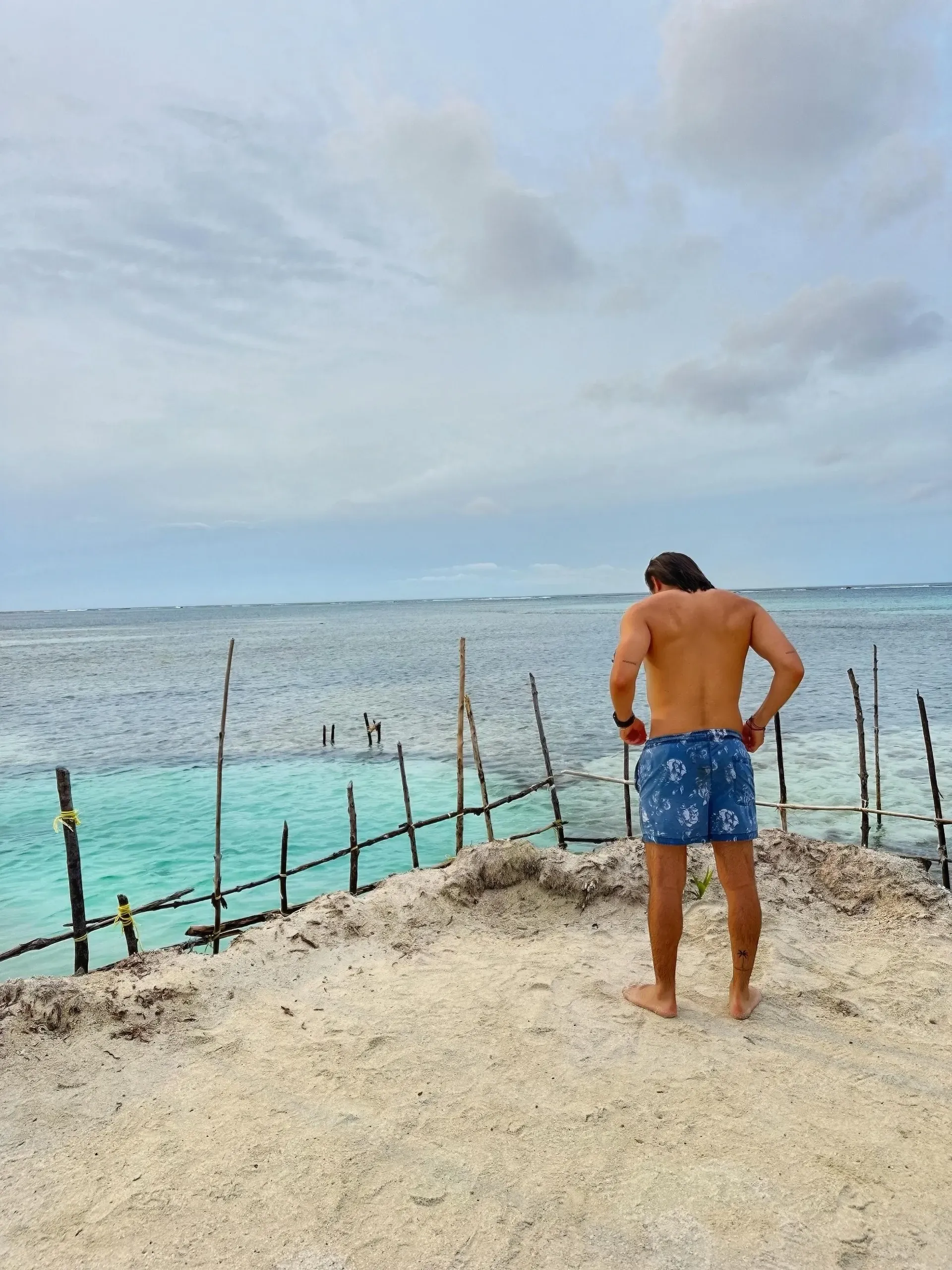
The photo at the top of this page, a sandy edge propped up with poles and rope, shows the everyday version of that fight.
Gardi Sugdub, the first community to move
Gardi Sugdub lies a short boat ride off the Cartí coast. Its residents began planning a move to the mainland in 2010, Human Rights Watch says, and the government built 300 houses at a new site called Isber Yala. Panama’s Environment Ministry, cited by La Prensa, says the homes were handed over on 29 May 2024, and families crossed to the mainland in early June. The AP put the government’s cost for the new site at 12 million dollars.
Not everyone left, and the move did not solve everything. Human Rights Watch had warned in early 2024 that the site still lacked an adequate water supply, plans for sewage and rubbish, and the promised clinic. The island itself remains inhabited by those who chose to stay.
Gardi Sugdub will not be the last
Human Rights Watch counted 38 communities in Panama that may need to relocate because of overcrowding and rising seas. Another Guna community, Ukupa, saw its homes made uninhabitable by floods in December 2024; residents chose a safer site called Wichumur, but by November 2025 the government support they needed had still not arrived. Panama has been drafting an executive decree and a national protocol for planned relocations, which according to Human Rights Watch was awaiting the president’s signature in late 2025.
These decisions are taken by the communities and their congresses, not by outsiders, which is the same principle behind the rule that no outsider can buy an island here.
Will the islands on a tour disappear?
Not on any timeline that affects a trip you are planning. The uninhabited cays visited on tours, such as Chichime or the sandbars around the Piscina Natural, are low too, and they will change over decades. But no one has published island-by-island predictions we could responsibly repeat, and you should be wary of anyone who sells San Blas as a “see it before it disappears” destination. The honest picture is slower and more serious: whole communities adapting, at great cost, over the coming generations.
If you want the bigger picture of how many islands there are and how many are inhabited, start with how many islands San Blas really has.
What visitors can do
None of this is a reason to stay away. Tourism, run by the Guna themselves, is part of how the comarca pays its way. What matters is how you behave once you are there:
- Pay the comarca’s entry tax at the checkpoint, in cash or by card to our driver. It goes to the Guna territory, not to a tour company, as we explain in where the community tax goes.
- Leave the reef alone. Coral is the islands’ breakwater. Don’t stand on it, use reef-safe sunscreen and take nothing home, sand, shells and coral included. Our marine wildlife guide explains what lives there.
- Carry your rubbish out. Small islands have nowhere to put it, and our eco-tourism guide sets out the basics.
- Treat communities as communities. Gardi Sugdub and its neighbours are not an attraction. Ask before photographing people, and follow your Guna guide’s lead.
Frequently asked questions
Are the San Blas islands sinking?
They are being overtaken by a rising sea rather than sinking. Most inhabited islands sit about half a metre above sea level, and the Caribbean is rising by roughly 3 to 4 millimetres a year, with faster rates expected later this century.
Will San Blas be underwater?
STRI’s Steven Paton expects the Guna to have to abandon the islands almost surely by the end of the century or earlier. It is a gradual process, not a sudden flood, and it varies from island to island.
Which San Blas island was evacuated?
Gardi Sugdub, off the Cartí coast. About 300 families moved to a new mainland neighbourhood, Isber Yala, in early June 2024, in what is described as Panama’s first climate-related relocation. Some residents chose to stay on the island.
Is it still worth visiting San Blas?
Yes. The changes unfold over decades, and Guna-run tourism helps support the comarca. Visit respectfully: pay the entry tax, protect the reef and do not treat relocated communities as a sight.
Do other communities in Guna Yala plan to move?
Yes. Human Rights Watch counts 38 communities in Panama that may need to relocate, and the Guna community of Ukupa has been waiting for government support since floods in December 2024 made its homes uninhabitable.
Ready to see it for yourself?
Message us on WhatsApp — a real person helps you plan, no contact form.
Book Now